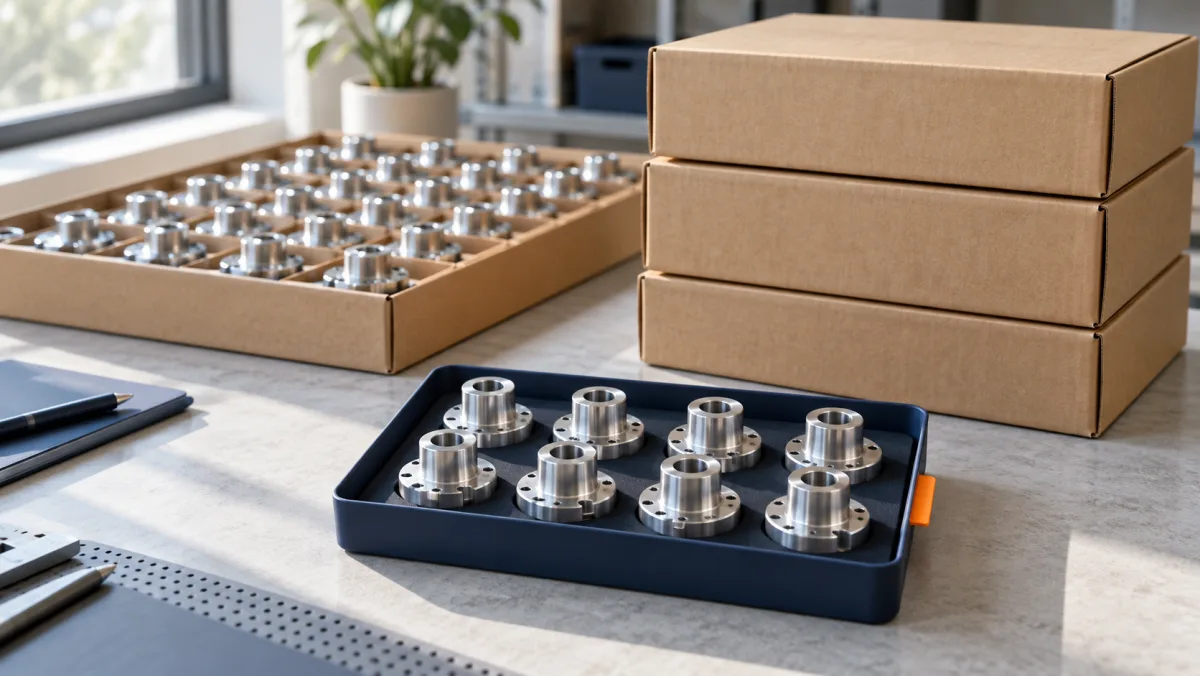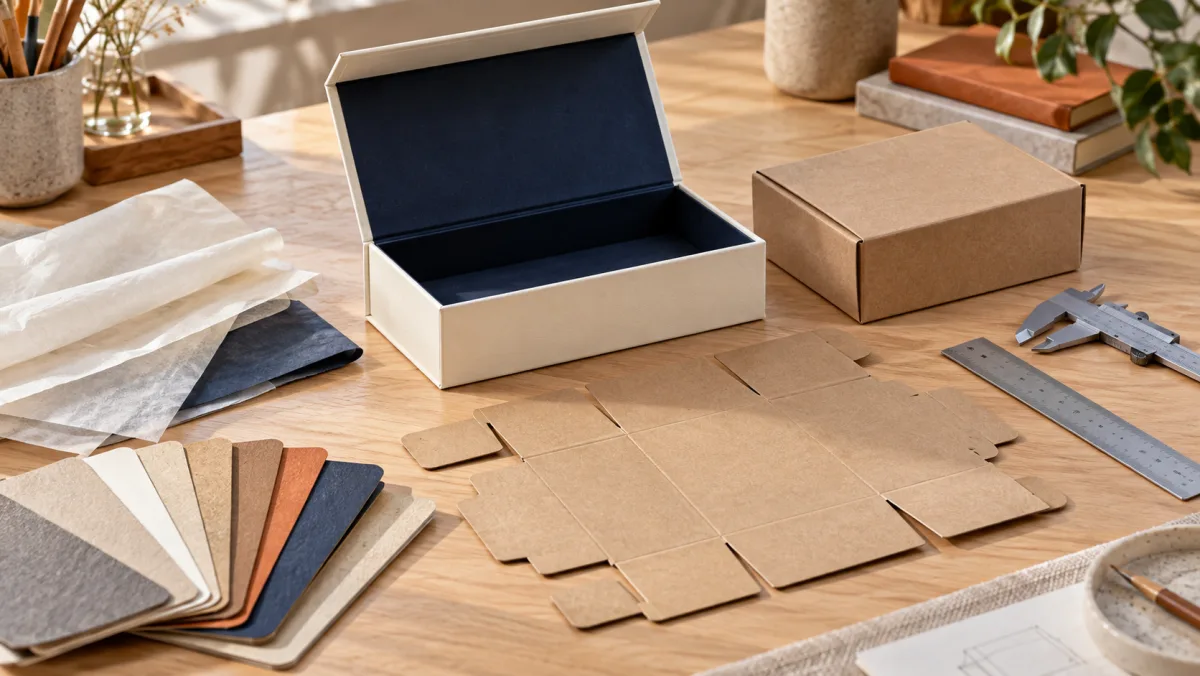
“We need a premium box” gives a packaging supplier a style direction, but little basis for a comparable quotation. The box may need to protect a fragile object, fit a retail shelf, travel flat, or accommodate a label that has not been finalized. Those requirements can point to different constructions.
A useful sourcing brief turns the intended application into measurable specifications, an approval process, and open questions. The aim is to make proposed solutions comparable while leaving room for a manufacturer to suggest an alternative.
Use this worksheet alongside the broader Japanese SME sourcing guide. It focuses on custom packaging development rather than supplier discovery.
Begin with the product and the packaging's job
Describe what goes inside the package before describing its appearance. Include product dimensions, weight, shape, fragile areas, sharp edges, and any components packed separately. Supply a drawing or sample reference with a version number. State whether dimensions are maximum, nominal, or measured from a particular sample.
Explain the application: transport protection, retail display, gift presentation, storage, or a combination. Describe the packing process and who performs it. A design that looks correct on a desk may still be awkward to assemble around the product.
List the destination markets and expected storage and transport conditions. Identify any direct contact with food, cosmetics, or other contents requiring specific assessment. State the actual application rather than asking for a broad, undefined “safe material.”
Separate essential requirements from preferences. A package that must fit an existing shelf has a different constraint from one whose color is still open to discussion. Mark missing information as pending instead of asking a supplier to guess.
Specify dimensions, construction, and materials precisely
State the measurement order and unit, and distinguish internal dimensions from external dimensions. Include permitted variation only when it has been decided or can be evaluated. Ask the supplier to flag tolerances it cannot meet rather than treating every drawing annotation as accepted.
For each component, record material, thickness or basis weight where relevant, color, surface treatment, and assembly method. Identify inserts, windows, closures, handles, labels, and protective layers separately. If the material is undecided, describe the performance needed and invite a documented proposal.
Brief item | Information to supply or request |
|---|---|
Fit | Product drawing, internal clearance, external size limit, measurement units |
Construction | Box style, opening direction, insert layout, closure, assembly method |
Materials | Component materials, thickness or weight, acceptable substitutions |
Printing and finish | Artwork version, color references, print areas, finishing requirements |
Delivery format | Flat or assembled, units per bundle, carton requirements |
Approval | Prototype stages, test questions, authorized approver, change record |
Avoid relying on a photograph as a dimensional specification. Use it to identify a feature or visual direction, and state which details are merely illustrative. Ask before sharing another company's design files or treating a reference design as something you have permission to reproduce.
Define artwork and labeling responsibilities
Give each artwork file an identifier, date, language, and status. Distinguish a draft layout from print-ready artwork. Record who checks text, who owns the design, who creates the production file, and who approves the final proof.
Ask about dielines, bleed, safe areas, barcode placement, and the way colors will be evaluated. Specify whether approval is based on a screen proof, printed proof, physical reference, or production sample. Keep the file version approved for manufacture attached to that decision.
Treat mandatory marks and environmental claims as separate review items. METI's official guidance explains Japan's identification marking system for relevant packaging categories. A mark used in one market should not simply be copied into artwork for another. See METI's packaging identification guidance.
An identification symbol is not evidence for every sustainability claim. Ask what supports statements about recycled content, recyclability, or compostability for the specific construction and destination. Leave unverified claims out of the approved artwork. If Japanese text is involved, include localization and copy review in the responsibilities rather than assuming the manufacturer is approving the meaning.
Request evidence for the actual intended application
If the packaging will contact food, provide the food type, contact conditions, temperature, duration, and destination market so that relevant requirements can be assessed. Do not infer suitability from an unrelated certificate or from the appearance of a material.
Japan's Consumer Affairs Agency maintains the positive-list information for synthetic resins used in food-contact apparatus, containers, and packaging, including current notices and questions and answers. That is one specific regulatory framework; it does not establish blanket approval for a complete package or another destination. Consult the CAA's current positive-list information.
Request documents that identify the relevant material or component, applicable conditions, issuing party, and date. Check whether a proposed coating, ink, adhesive, or substitute changes the evidence needed. Give the relevant specialist the actual specification, rather than asking them to approve a marketing description.
Use the same discipline for performance evidence. A proposed test should state the method, sample construction, conditions, and acceptance criteria. “Strong packaging” is a goal; it is not a test result.
Separate prototypes, production quantities, and packing
Ask for the development stages and their separate costs and lead-time assumptions. A plain structural prototype can answer a fit question without establishing print quality. A printed sample can answer an artwork question without proving the consistency of a production run.
Request the minimum order quantity for each construction and print variant. Ask whether it applies per size, design, color, or total order. Keep initial order quantity and possible reorder quantities separate; a forecast should not be presented as a committed purchase.
Define master-carton quantities, shipment dimensions, gross weight, moisture protection, and handling requirements as the design becomes firmer. Packaging delivered assembled can require a different logistics plan from packaging delivered flat. Ask who will assemble it and what instructions or equipment are needed.
A hypothetical brief might request a folding carton for a non-food desk accessory, with product dimensions of 120 × 60 × 30 mm and a production quotation at 500 and 1,500 units. Those are example inputs, not supplier capabilities. The brief would still need fit clearance, material proposals, artwork, packing format, and approval criteria before becoming a production instruction.
Approve a controlled specification before manufacture
Collect open questions in one place. For every proposed substitution or revision, show what changes, why it is proposed, its effect on price and timing, and whether a new sample or evidence review is needed. Do not let a revised email attachment silently replace an approved drawing.
Before production, confirm the specification revision, approved artwork, reference sample, quantity, packing, delivery arrangement, inspection scope, and procedure for handling deviations. Identify the people authorized to approve changes on each side. Keep unresolved commercial or contractual questions visible for review.
Our buyer support overview explains the broader sourcing context. To discuss a packaging requirement, submit the application, product drawing or dimensions, destination, quantity, and current artwork stage through the product sourcing request form. Mark preferences and undecided items clearly so that the first discussion can focus on the right questions.