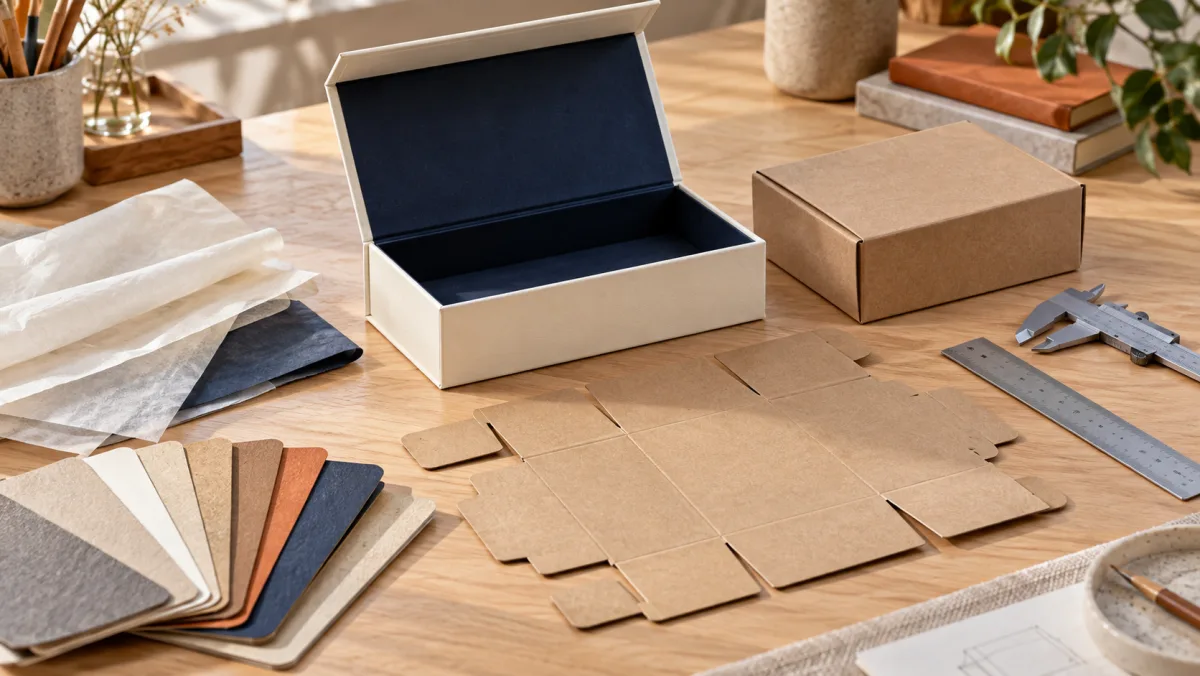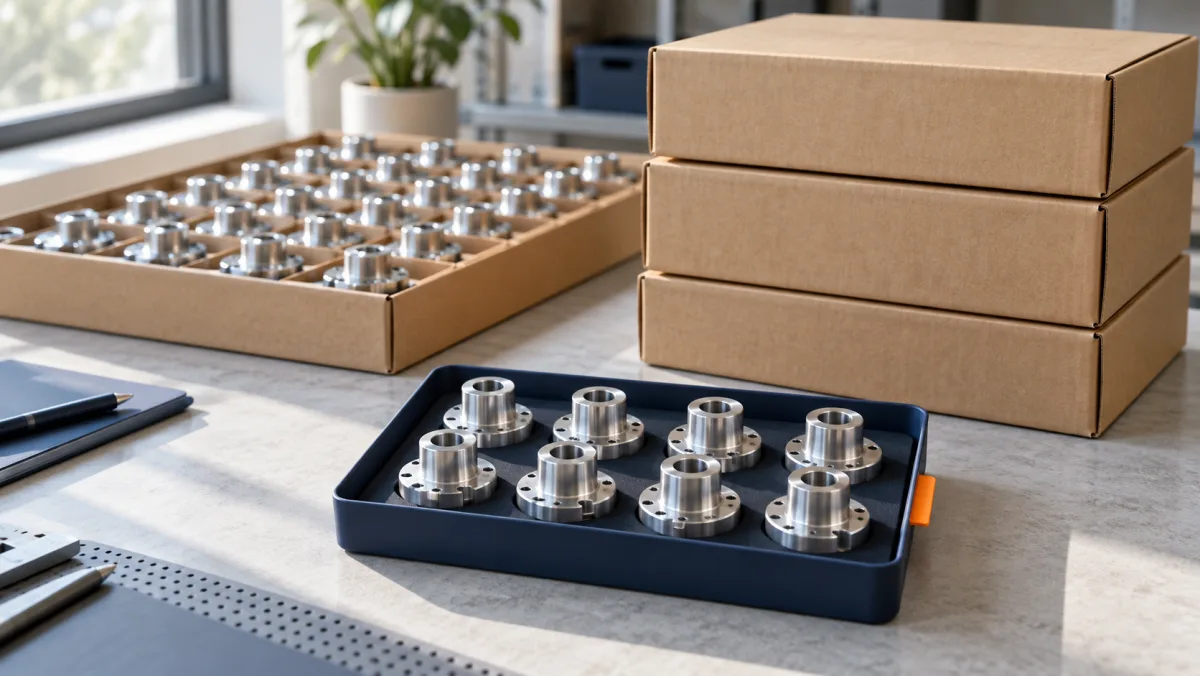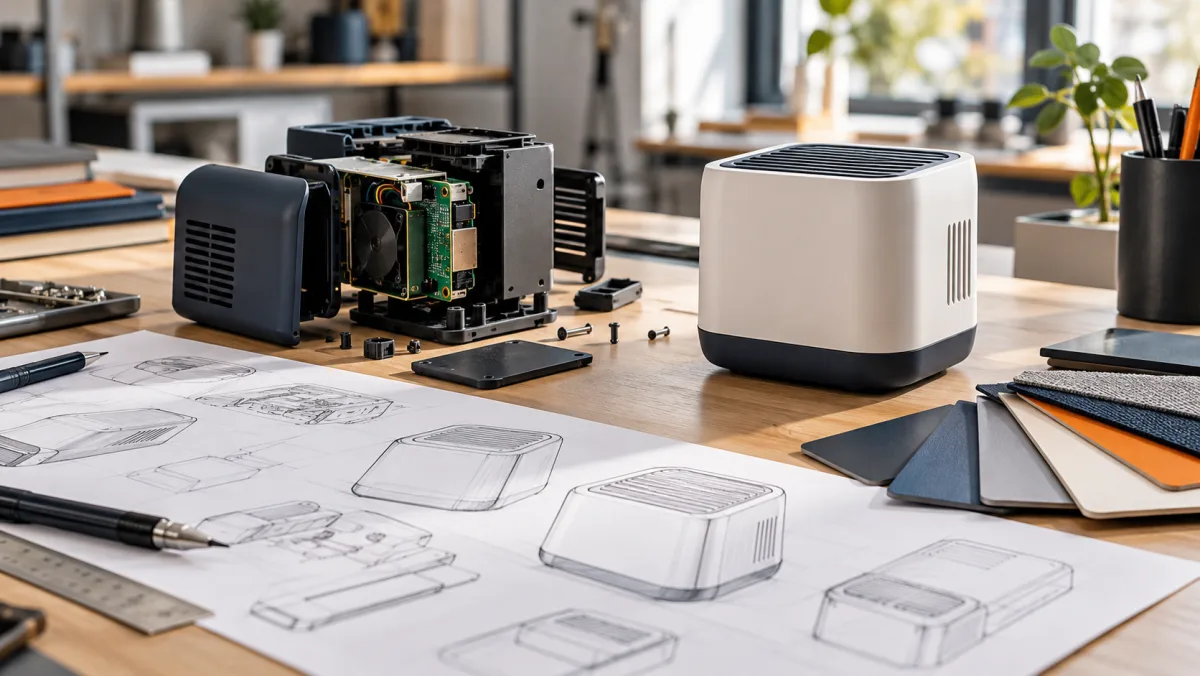
A supplier offers an existing product with your logo. Another asks for complete drawings. A third proposes adapting its own platform. All three may describe their service as OEM, ODM, or custom manufacturing, yet their proposals can leave very different responsibilities with the buyer.
For a sourcing project in Japan, choosing a label is less useful than agreeing who supplies the design, who can change it, and what the buyer receives after development. This guide uses OEM for manufacture based mainly on the buyer's defined design and ODM for a supplier-designed product or platform adapted for the buyer. Treat those as working descriptions and confirm each supplier's actual scope.
Start with the work you need the supplier to perform
Describe the project before asking whether the supplier is an OEM or ODM. Do you need production from released drawings, help turning a concept into a manufacturable product, or limited changes to an existing item? Those are different work packages even when the finished products look similar.
List what already exists: industrial design, mechanical drawings, formulation, electronics, software, test methods, packaging artwork, and manufacturing instructions. Assign each item a status: buyer-owned and ready, available but needing revision, supplier proposal required, or outside the project.
For a hypothetical desk accessory, a buyer might own the brand and exterior shape but have no internal fastening design. Describing the whole job as “build to print” would hide that engineering gap. A supplier's existing mechanism could be an option, provided its use, modification, and commercial terms are settled.
The Japanese SME sourcing guide covers the wider supplier-selection process. Here, the focus is the development boundary inside that process.
Compare the models through deliverables
Ask each supplier to explain its proposal in terms of inputs, outputs, and decisions. A useful comparison has room for a hybrid arrangement rather than forcing every project into one category.
Question | Buyer-led design arrangement | Supplier-led design arrangement |
|---|---|---|
What starts the work? | Buyer specifications and released design files | Supplier platform or a jointly agreed brief |
What must be reviewed? | Manufacturability, tolerances, process assumptions | Functional fit, permitted changes, platform limits |
What should be delivered? | Agreed parts, records, and any contracted engineering files | Agreed product plus specifically negotiated design deliverables |
What needs separate agreement? | Tooling rights, design changes, subcontracting | Platform rights, customization rights, exclusivity, transferability |
These columns are discussion prompts. They do not establish what a particular Japanese supplier offers. A quotation should identify the exact work included, deliverable formats, revision count, approval milestones, and exclusions.
Ask for a distinction between development and production. A development fee may purchase engineering services without transferring every design right or editable file. Conversely, a buyer may not need full design ownership if an appropriately defined license supports the intended business.
Map ownership and permissions before development
Create an asset register with separate entries for pre-existing designs, new project work, tools, software, and documentation. For each entry, record the claimed owner, supporting agreement, buyer's permitted use, and unresolved questions. An invoice for a mold is not a complete record of the rights attached to the product design.
Keep ownership, possession, and permission to use separate. A tool can sit at a supplier's factory while different arrangements govern who owns it, maintains it, can move it, or may use it for other customers. Record those points explicitly instead of relying on the phrase “our tooling.”
WIPO distinguishes industrial design protection for a product's appearance from patent protection for technical inventions. That distinction helps explain why a single “IP ownership” sentence may miss important assets. WIPO: Industrial Designs FAQ
Use this register to prepare a focused discussion with the relevant advisers. The commercial questions include whether you can use the product in your intended markets, appoint another manufacturer, modify the design, and continue supply after the relationship ends. Do not assume exclusivity unless the parties have agreed its product, territory, channel, duration, and exceptions.
Approve samples against named questions
A sample is valuable when it answers a defined question. Separate appearance review, functional testing, packaging review, and production-process validation. A handmade appearance model may settle color and proportions while providing little evidence about a production joint or surface finish.
For the hypothetical desk accessory, the buyer could use three gates:
- Concept gate: agree dimensions, intended load, and the design responsibilities still open.
- Engineering gate: test an identified sample revision for fit and function, recording deviations and proposed corrections.
- Production gate: review samples made using the intended materials and process, alongside the agreed inspection and packaging records.
At each gate, identify the person authorized to approve, the evidence needed, and the next expenditure being authorized. Approval to refine a prototype should not silently authorize a production run.
Where specifications depend on a certification or test report, check that the evidence applies to the actual product configuration and intended market. The certification review guide provides questions to organize that review. Treat a platform certificate as a document to assess, rather than proof that every customized version is covered.
Put changes and information sharing under control
Changes can begin with either party: a buyer requests a new finish, or a supplier proposes a replacement component. Use a change request that names the affected revision and asks about cost, testing, stock, schedule, and documentation. Record approval before the change enters production.
Keep approved samples tied to the same revision system as drawings and the bill of materials. Photographs are useful references, but the record should also state what the sample represents and which features were accepted. Retain rejected revisions so a later repeat order does not accidentally restart from the wrong file.
Development also expands the group of people receiving information. WIPO explains that manufacturing know-how and commercial information can be trade secrets when the relevant conditions are met, including reasonable measures to keep them confidential. WIPO: Trade Secrets FAQ
Identify who may receive which files, including external designers and subcontractors. Share only the information needed for the agreed work. Use an appropriate confidentiality arrangement and controlled access rather than relying on a broad distribution list.
Test the arrangement against a repeat order and an exit
Before committing to development, walk through two scenarios. First, demand increases and you need a repeat order with a minor revision. Second, the supplier relationship ends and you need to keep supporting the product. Ask what documents, permissions, tooling access, and technical support each scenario would require.
Record dependencies that cannot be transferred easily. A supplier's platform may include proprietary processes or components that are outside the deliverable package. Knowing that early lets the buyer compare the arrangement fairly with a more independent design route.
The right structure depends on the product and the buyer's resources. Review the buyer support overview for how a sourcing discussion can be framed. To discuss a specific requirement, submit a sourcing request describing the design work you already control, the work still needed, and your sample or first-order objective.