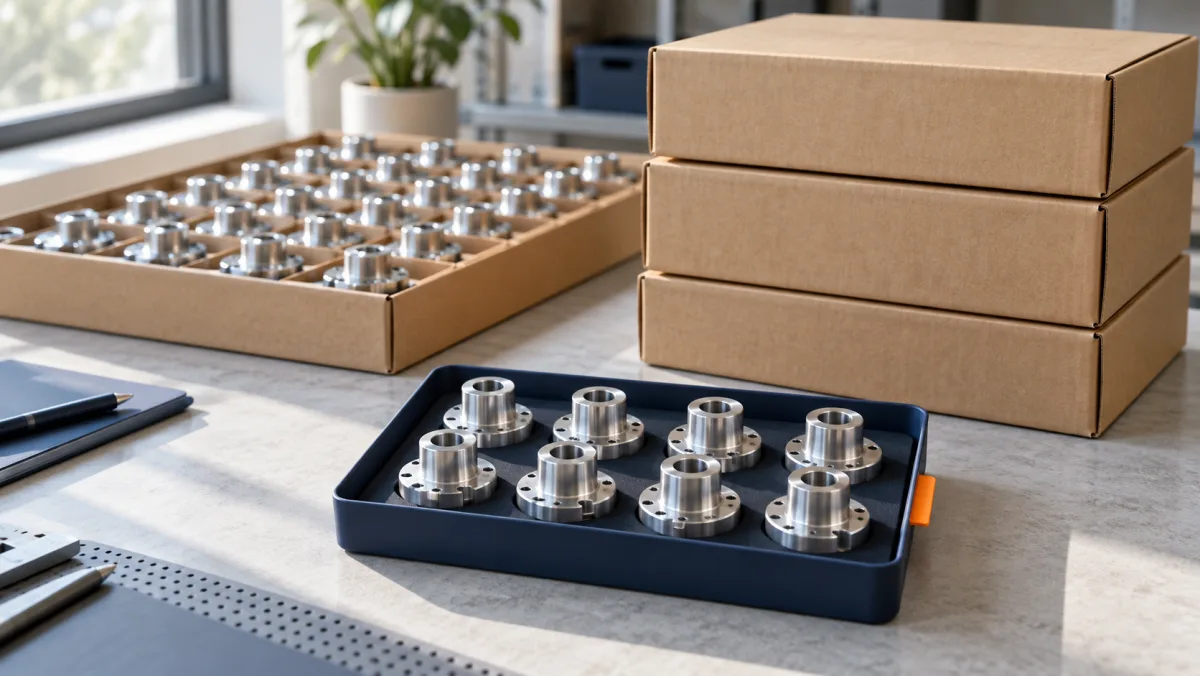
A supplier sends an impressive presentation and an ISO certificate. The purchasing team still needs to know whether the next production batch will meet its drawing. That answer comes from the supplier's actual process, measurement, and response to problems.
Japanese manufacturing has influenced production practice internationally, but a national reputation is not an acceptance criterion. Evaluate the particular factory, product, and people involved. This guide turns broad claims about quality into questions a buyer can investigate.
Translate “high quality” into requirements
Begin with the intended application and consequences of failure. A cosmetic mark, dimensional error, material substitution, and missed delivery create different risks. State what matters in measurable terms and distinguish critical characteristics from preferences.
Supply the drawing or product specification with a controlled revision. Explain the operating conditions, interfaces, packaging, and destination requirements that affect performance. If a tolerance is negotiable, identify the function behind it so engineering can evaluate a proposed change.
For an illustrative housing component, the seal surface may be critical while a concealed nonfunctional surface permits minor variation. Treating both identically can add cost without improving the function. That judgment belongs to the responsible engineering and quality teams, not an informal purchasing assumption.
Ask how a defect would be detected
Follow the product from incoming material to finished shipment. At each important step, ask what is controlled, how it is checked, and what happens when a result is outside the requirement.
Request a relevant example of inspection records, appropriately redacted if necessary. Check whether the record identifies the product revision, lot, measurement method, and disposition of any exception. A blank form demonstrates a template; a completed record shows how the process is used.
Ask who has authority to stop work or hold a shipment. If the answer depends on a single person, discuss coverage when that person is absent. The process needs to function under ordinary staffing conditions, not only during a customer visit.
Use production concepts as questions, not guarantees
Toyota describes its production system around jidoka and Just-in-Time. The concepts help explain Toyota's approach to detecting abnormalities and organizing production flow. Their presence in a supplier presentation does not prove that the same practices work effectively at that supplier.
Ask for concrete evidence: how was a recurring defect investigated, what changed, and how was the change checked? A small documented improvement can be more informative than a long list of Japanese management terms.
The same applies to an orderly workplace. Organization may support good work, but a clean aisle does not establish material traceability or dimensional capability. Connect observations to the process producing your goods.
Check measurement capability
Discuss how critical characteristics are measured, the equipment used, calibration, sampling, and the conditions under which measurements are taken. Have the relevant technical team review whether the method is suitable for the tolerance and application.
Agree how your receiving inspection and the supplier's inspection will compare. Differences in fixtures, methods, or interpretation can produce disputes even when both teams believe they followed the drawing.
Where appropriate, use a shared measurement exercise or sample evaluation before production approval. Keep the results with the specification and record how disagreements were resolved. Do not rely solely on an equipment list; ownership of a measuring machine does not show how it will be used for your order.
Read certificates for their scope
ISO explains that certification is performed by external certification bodies, not by ISO itself. Obtain the certificate, check the named entity, site, scope, validity, and issuing body, and verify important claims through the appropriate source.
A management-system certificate is useful evidence about a system. It does not replace inspection or establish that every product meets your requirements. The certification guide covers that distinction in more detail.
If a required operation is outsourced, establish whether your requirement applies to the subcontractor and what evidence is needed. Do not assume the main supplier's certificate covers every external process.
Examine traceability and change control
Ask how the supplier connects incoming material, production lots, inspection records, and shipped goods. The required depth should match your risk and contractual requirements.
Then test a practical question: if a material lot is found unsuitable, how would the supplier identify affected shipments? A description of the retrieval process is more useful than the statement “we have full traceability.”
Agree which changes require notification or approval. Materials, tooling, process location, subcontractors, software, or inspection methods may matter depending on the product. Record the notification path so a proposed change does not remain in one engineer's inbox.
Review a problem from containment to prevention
Ask how a nonconforming delivery is handled. Separate the immediate containment of suspect goods from the investigation and the longer-term corrective action.
Stage | Buyer question |
|---|---|
Detection | How is the issue documented and communicated? |
Containment | Which goods are held, checked, or traced? |
Investigation | What evidence identifies the cause? |
Correction | How are affected goods dealt with under the agreement? |
Prevention | What changes, and how is effectiveness checked? |
Set response expectations appropriate to the product and supply risk. A generic promise to respond quickly is less useful than agreed contacts and a clear escalation procedure.
Compare total cost using actual risks
Include inspection, rework, scrap, transport, downtime, and management effort when comparing offers. Do not assume that a higher price always means better quality or that a lower price necessarily means higher risk.
Record the evidence behind each estimate. If a risk has not been evaluated, mark it as unknown rather than inserting an arbitrary saving. A pilot order can help replace assumptions with observations.
Review repeat production after approval. A successful prototype is a milestone, but the continuing relationship depends on stable execution, clear changes, and effective responses when something goes wrong.
For a technical sourcing project, continue with the precision manufacturing guide or our buyer support information. Bring the specification, critical characteristics, and qualification questions so potential suppliers can be evaluated against the work you actually need.