Two workshops quote the same precision part at very different prices. One proposes additional grinding and inspection; the other asks whether a tolerance can be relaxed. Before choosing, you need to understand how each route meets the function of the part.
Precision sourcing works best when purchasing, engineering, and the supplier discuss the same drawing and application. A machine list or a photograph of a polished component is only an introduction. The real questions concern process capability, measurement, repeatability, and the transition from sample to production.
This guide offers a buyer's workflow for evaluating Japanese suppliers. Technical decisions should be made by the responsible engineers and quality specialists for the application.
Define precision in the context of the part
Identify the characteristics that determine fit, function, safety, and life. Explain operating conditions, mating components, surface requirements, and any material or treatment requirements.
Keep the drawing revision controlled and clarify which document takes precedence if a model and drawing differ. Identify units, datums, and standards where relevant. Ask the supplier to raise ambiguities before quoting.
An unnecessarily tight tolerance can change the production route and cost. An insufficient tolerance can make the part unusable. Invite a documented manufacturability review, but require engineering approval before changing the requirement. A purchasing team should not resolve a functional uncertainty by accepting whichever interpretation produces the lowest price.
Match the process to the geometry and material
Ask the supplier to outline the proposed sequence, including material preparation, machining, treatment, finishing, cleaning, and inspection as applicable. Understand which steps occur in-house and which are subcontracted.
Equipment is relevant, but its name alone does not establish capability. Discuss workholding, tool access, material behavior, and the characteristics likely to be difficult. Ask for evidence from comparable work that can be shared without violating another customer's confidentiality.
For a hypothetical thin-walled component, clamping and distortion may matter as much as nominal machine accuracy. For a small hole pattern, measurement and datum interpretation may drive the acceptance discussion. These examples illustrate questions to raise, not a prescribed manufacturing method.
Send an RFQ that supports a comparable response
Include the current drawing, material requirements, quantity breaks, expected annual demand, intended application where shareable, inspection deliverables, packaging, destination, and requested schedule.
Separate firm requirements from forecasts. Tell the supplier whether the project is a feasibility study, prototype, qualification batch, or production order. A quotation for one stage should not be treated as a promise for another.
RFQ item | Why it affects the quote |
|---|---|
Material and condition | Procurement, availability, and processing assumptions |
Critical dimensions and surfaces | Process route and measurement work |
Batch size and forecast | Setup allocation and capacity planning |
Inspection package | Required measurements and reporting effort |
Treatment or coating | External processing, verification, and lead time |
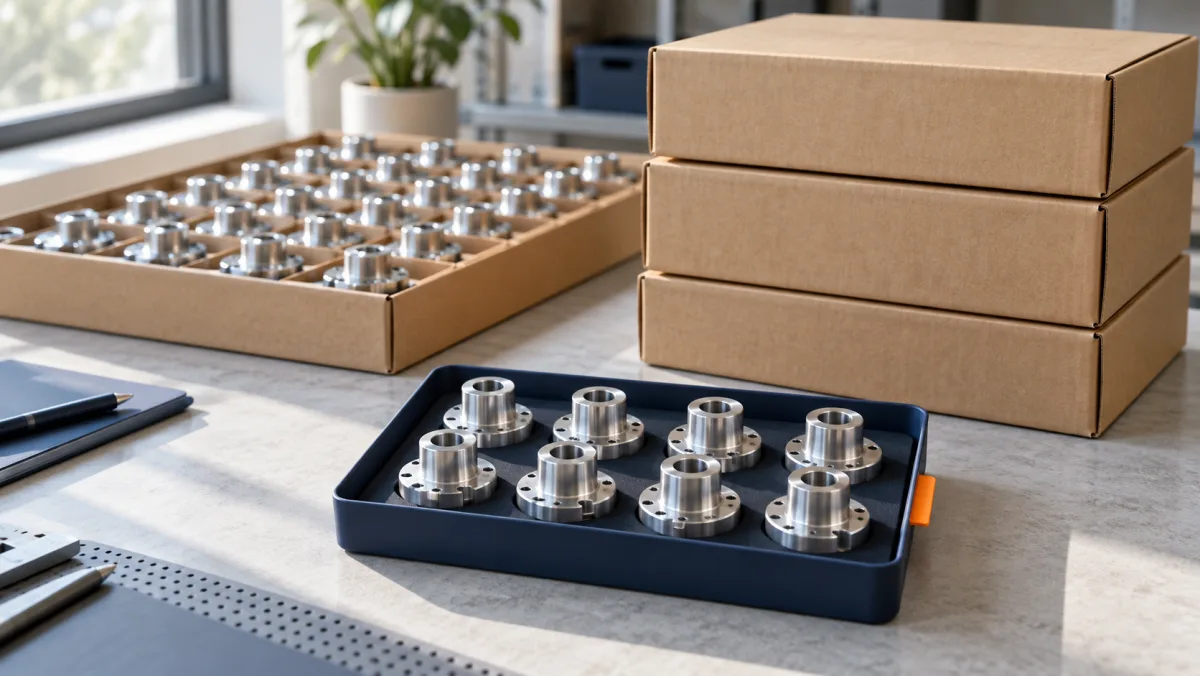
Packaging | Protection against damage, contamination, or corrosion |
Request that exclusions and proposed deviations be listed explicitly. That makes a cheaper alternative assessable instead of leaving its assumptions hidden.
Agree how the part will be measured
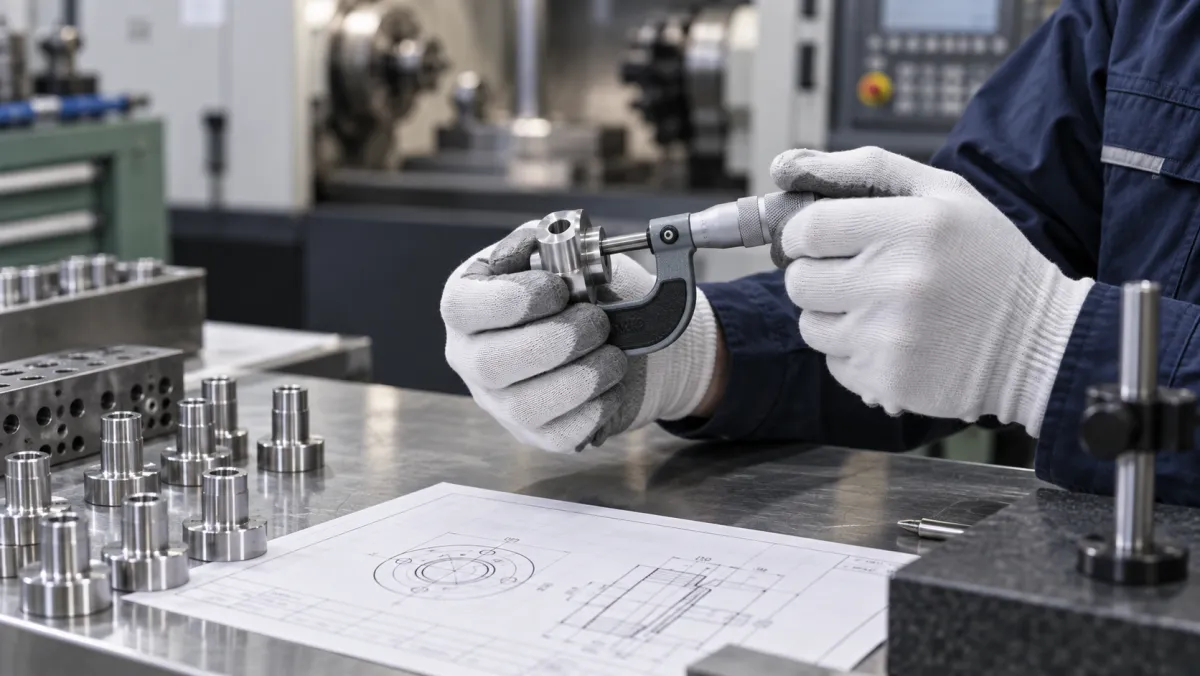
Discuss inspection methods before producing the first sample. The supplier and receiving team should understand the datum system, measurement conditions, equipment, and reporting expected for critical characteristics.
Ask how equipment suitability and calibration are managed. Where the risk justifies it, arrange a measurement comparison or specialist review. A numerical result is only useful when the method and its limitations are understood.
Keep acceptance criteria separate from a general quality certificate. ISO's explanation of ISO 9001 concerns requirements for an organization's quality management system. That does not replace the evidence needed to accept your specific part.
Distinguish prototype success from production readiness
Ask whether the sample will use the intended production materials, equipment, tooling, and sequence. A prototype may use a different route to prove geometry or function. That can be appropriate if everyone understands what it proves and what it does not.
Document evaluation results and any approved changes. Keep a reference sample where useful, but do not allow it to replace written requirements that production and receiving teams need.
Before increasing volume, discuss the evidence required for repeatability and capacity. Define the approval process for the first production batch, inspection records, and treatment of exceptions. Avoid leaving production release to an informal email saying the sample looks good.
Understand the external process chain
Heat treatment, coating, specialist finishing, and testing may involve other companies. Identify the critical external steps and how the supplier controls their specification, traceability, and changes.
Ask how schedule risk is managed across that chain. A machining estimate may exclude the time for external processing, verification, and transport. Request an end-to-end schedule with the assumptions visible.
Where intellectual property or sensitive technology is involved, review information-sharing and applicable controls before transferring technical data. Establish who may receive drawings and whether approval is needed for additional subcontractors.
Compare total delivered cost
Normalize quotations for specification, quantity, setup, tooling, inspection, packing, currency, and delivery responsibilities. Include the work your own team must do to qualify and receive the parts.
Investigate differences rather than assuming an expensive quote is premium or an inexpensive one is incomplete. A supplier may have a suitable existing process, a different sourcing assumption, or an unresolved interpretation of the drawing.
Ask what changes at larger volumes and what requires new tooling or qualification. The right source for a development batch may not be the most suitable source for sustained high-volume production. Record that possibility before promising a long-term price internally.
Build change control into repeat orders
Agree which changes require notification or approval, including materials, location, subcontractors, tooling, and process steps where relevant. Keep the approved drawing revision attached to orders and confirmations.
Review quality, delivery, and communication after the first batches. When a problem occurs, use measurement and process evidence to investigate it. Our manufacturing quality guide provides a practical checklist for that discussion.
For help coordinating supplier qualification, see our buyer support information. The most useful starting materials are the controlled specification, target quantities, application risks, and the decisions your engineering team still needs to make.